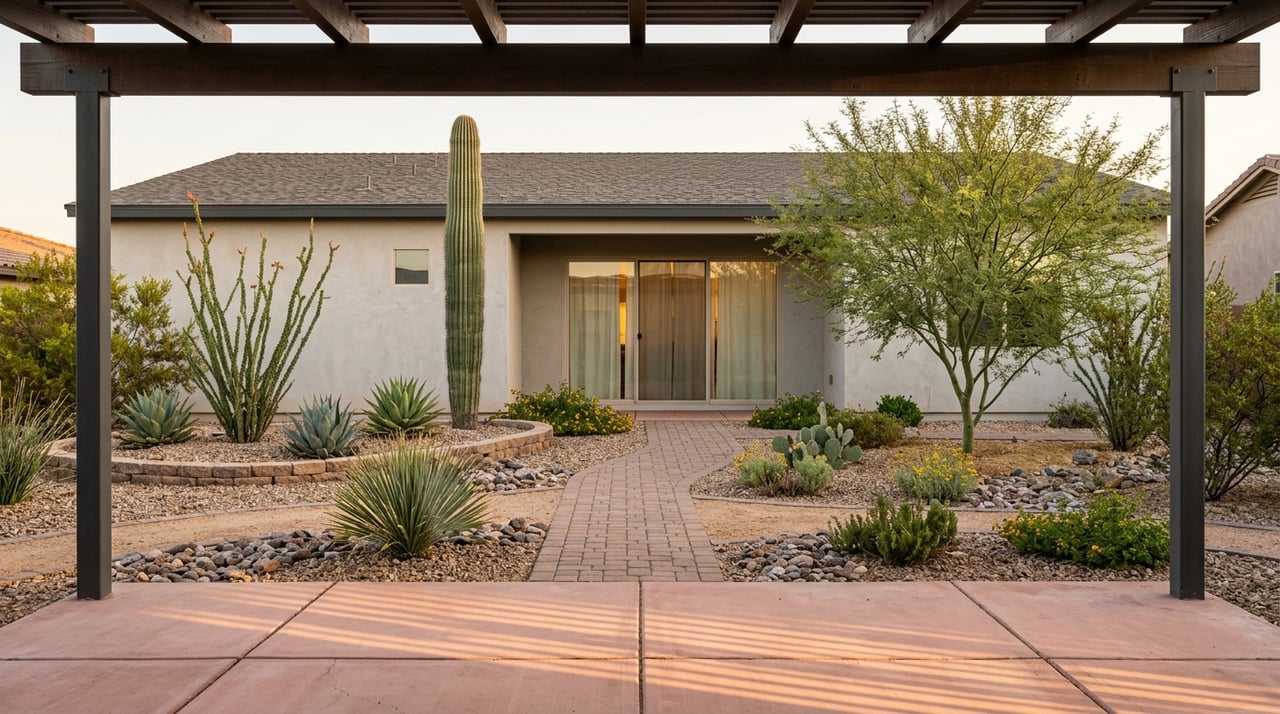
If you are thinking about buying in Vail, one question can shape your whole search: do you want a master-planned community with shared amenities, or more land with more room to spread out? It is an important choice because in Vail, lot size often connects to your commute, maintenance load, and how much day-to-day structure you want around your property. This guide will help you compare both paths so you can move forward with more clarity and less stress. Let’s dive in.
Why this choice matters in Vail
Vail is an unincorporated area in Pima County, not an incorporated town with official boundaries. In practice, that means your home search may stretch across a broader area than you first expect, and neighborhood decisions often overlap with commute patterns and service access.
The local housing profile also helps explain why this decision feels so personal. Census data for Vail shows a 2020 population of 13,604, an owner-occupied housing rate of 91.1%, a median owner-occupied home value of $414,600, a median household income of $130,904, and a mean travel time to work of 29.7 minutes. In other words, many buyers here are weighing convenience against space in a market where commuting is part of daily life.
The Vail School District also notes that its attendance areas cover the Vail area, Corona de Tucson, and the southeastern corner of Tucson. That means your home choice may affect more than your lot size and purchase price. It can also shape your drive times and the area you use for everyday routines.
What master-planned living offers
A master-planned community usually appeals to buyers who want a more predictable setup. You may get neighborhood amenities, shared open space, and a property that asks less of you on a daily basis.
In Vail, Rancho Del Lago is a strong example of this style of living. At The Landings at Rancho Del Lago, KB Home highlights amenities such as playgrounds, parks, pedestrian pathways, dog parks, and tennis, pickleball, and basketball courts. The builder also emphasizes access to I-10, Mercado del Lago, Houghton Town Center, and nearby employment centers.
That combination points to the main lifestyle benefit. You are often buying convenience, shared features, and easier routine upkeep, not just a home on a smaller lot.
Predictable upkeep and amenities
One of the clearest advantages of a master-planned community is that some maintenance and shared services are built into the neighborhood structure. That can make budgeting and planning feel simpler, especially if you want less property work on evenings and weekends.
Del Webb at Rancho Del Lago shows how this can work in practice. Its HOA dues are listed as $144 per month plus $72 per quarter in master dues, and those dues help cover shared sidewalks, weekly garbage and recycle pickup, private streets, a recreation center, sports courts, pools, common-area grounds, and walking trails.
For many buyers, that kind of setup creates a smoother daily routine. You trade some independence for a more managed environment with amenities and organized maintenance.
What you may give up
The tradeoff is usually private space and flexibility. In a more amenity-driven neighborhood, your yard may be smaller, your property may have more visible community standards, and HOA dues become part of your monthly budget.
That does not make master-planned living better or worse. It simply means the value is in convenience and predictability, not maximum privacy or unrestricted use of the land.
What more land can offer
If you picture a larger buffer between homes, room for hobbies, or space for animals and outbuildings, acreage may be the better fit. In Vail, that often means a different lifestyle rhythm, with more independence and more direct responsibility for the property.
Coyote Creek helps illustrate the larger-lot side of the market. The community describes 395 acre-plus homesites on 1,000 acres in Rincon Valley, with custom homes starting from $550,000 to $2 million and custom lots from $95,000 to $300,000. It states that the minimum lot size is 1.15 acres and that most lots are larger than 1.70 acres.
That kind of setting can support a very different buyer goal. Instead of prioritizing neighborhood amenities first, you may be prioritizing privacy, elbow room, views, customization, or a property that better fits animals or outdoor hobbies.
More privacy and customization
Larger parcels can open up possibilities that are harder to find in denser neighborhoods. You may have more room for detached structures, workshops, guest spaces, or horse-related improvements, depending on the property and county rules.
Pima County zoning matters here. Zoning categories such as GR-1 Rural Residence, RH Rural Homestead, SR Suburban Ranch, and SR-2 Suburban Ranch/Historic regulate issues like minimum area, setbacks, building heights, and accessory structures. If you are thinking beyond the house itself, these details deserve close attention early in your search.
More land does not always mean fewer rules
This is one of the biggest misconceptions in the Vail market. A larger lot does not automatically mean you can do anything you want with the property.
Coyote Creek, for example, includes HOA documents, a board of directors, a design review committee, a recreation center, and an equestrian center. So while the lots are larger, the community still has organized oversight and standards.
That is why more land should be seen as more potential, not automatic freedom. You still need to verify what the zoning allows, whether an HOA applies, and what approvals may be needed for future improvements.
Horse property questions to ask
If horses are part of your plan, it is important to look beyond acreage alone. A parcel may look ideal at first glance, but horse use depends on county rules, fencing requirements, and actual trail access.
Pima County says that in no-fence districts, livestock may not roam freely and ranchers must fence livestock in. County animal ordinances also address matters such as manure, noise, unsanitary premises, and dogs at large.
Trail access should also be verified instead of assumed. At the Gabe Zimmerman Davidson Canyon Trailhead, horses are not allowed in Cienega Creek Natural Preserve, but they are allowed on the Arizona Trail alignment only. If riding access is a priority, that distinction matters.
Commute and convenience still matter
Even if your dream home includes more land, daily logistics still count. Vail buyers often balance space with travel time because the area functions as part of a broader southeast Pima County market.
The Census reports a mean travel time to work of 29.7 minutes in Vail. That helps explain why community marketing in the area often emphasizes I-10 access and proximity to shopping or employment centers.
If you expect frequent drives into Tucson or nearby work hubs, convenience may affect your quality of life as much as lot size. It is worth thinking honestly about how often you want to trade extra land for extra windshield time.
How to decide which fit is right
The best choice usually comes down to how you want to live, not which option sounds better on paper. A master-planned community often fits buyers who want amenities, a more structured neighborhood environment, and less day-to-day property management.
A larger-lot property often fits buyers who want privacy, customization, and room for animals, toys, or projects. It can be a great fit, but it usually comes with more hands-on responsibility and more due diligence.
Here are a few questions to help you narrow it down:
- Do you want shared amenities like parks, courts, trails, or recreation spaces?
- Would you rather pay HOA dues for managed services, or handle more maintenance yourself?
- How important is a shorter drive to I-10, shopping, or work centers?
- Do you want space for horses, workshops, or future structures?
- Are you comfortable reviewing zoning rules, trail limits, and any HOA restrictions before you buy?
A simple Vail comparison
| Priority | Master-planned community | More land |
|---|---|---|
| Daily upkeep | Often lower due to shared services | Often higher and more owner-managed |
| Amenities | More likely to include parks, paths, courts, or recreation features | Varies widely by property and community |
| Privacy | Typically less private | Typically more private |
| Flexibility | More rule-based | More potential, but still subject to zoning and possible HOA rules |
| Commute convenience | Often marketed around access to I-10 and services | May require more tradeoffs depending on location |
| Space for animals or hobbies | Usually more limited | Often better, with verification needed |
The bottom line for Vail buyers
In Vail, the real choice is not simply smaller lot versus bigger lot. It is convenience and shared structure versus privacy and hands-on control.
Neither path is automatically better. The right fit depends on how you want your home to support your routines, your budget, and your long-term plans.
If you want a calm, thoughtful conversation about which Vail properties match your lifestyle, Genardini Realty Solutions can help you compare options with clarity and confidence.
FAQs
What does buying in a Vail master-planned community usually include?
- In communities like Rancho Del Lago, you may find amenities such as parks, pathways, dog parks, sports courts, and, depending on the neighborhood, HOA-covered items like private streets, trash service, recreation facilities, and common-area maintenance.
Do larger-lot homes in Vail always come without an HOA?
- No. Coyote Creek is a clear example of a larger-lot Vail community that still has HOA documents, a board, and design review.
What zoning should you check for acreage property in Vail?
- Pima County zoning categories such as GR-1, RH, SR, and SR-2 are important to review because they regulate lot area, setbacks, building heights, and accessory structures.
What should horse buyers verify before buying in Vail?
- You should confirm no-fence district status, county animal rules, fencing requirements, and whether the trail access you want actually allows horses.
How important is commute time when buying in Vail?
- It is a major factor. Census data shows a mean travel time to work of 29.7 minutes in Vail, so many buyers weigh space against access to I-10, services, and employment areas.