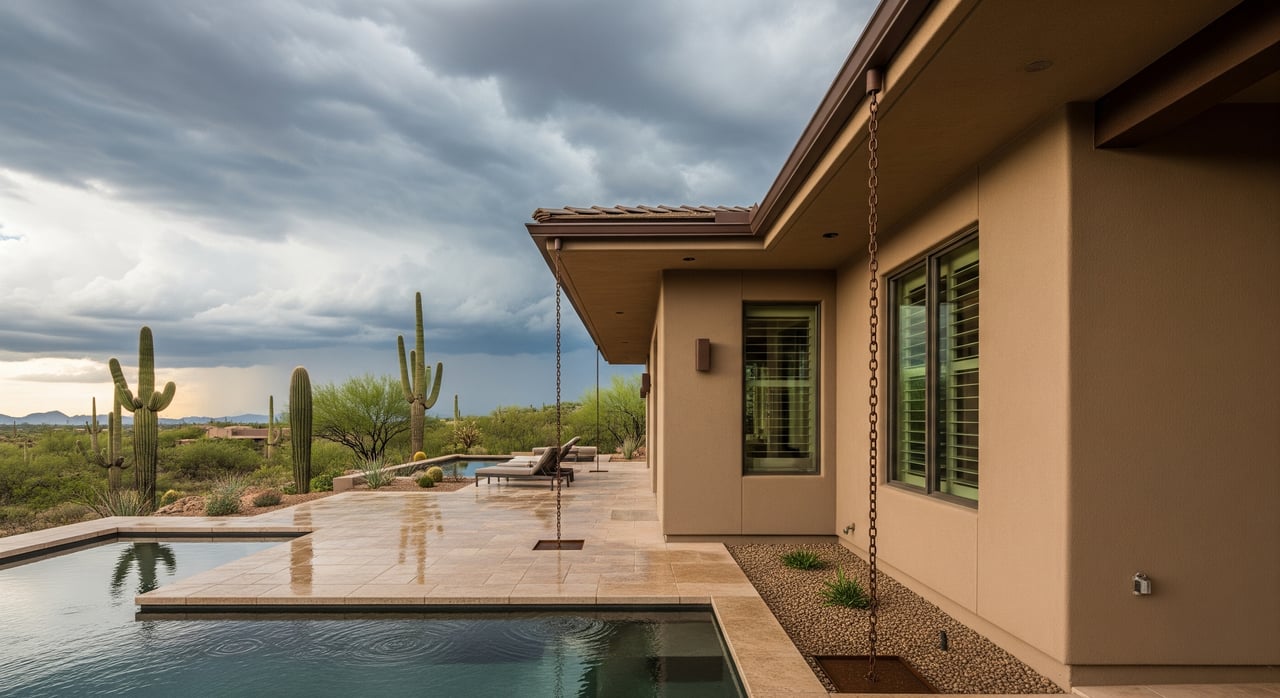
Monsoon storms can undo months of upkeep in one afternoon. In Vail, intense sun and sudden, wind‑driven rain test every part of your home’s exterior. You want practical steps that lower risk now and support long‑term value when you sell. This guide walks you through smart stucco care, roof underlayments, drainage, and permitting in unincorporated Pima County so you can move into the season with confidence. Let’s dive in.
Why Vail’s climate shapes your plan
Southern Arizona’s monsoon typically runs from mid‑June through September. Fast, powerful thunderstorms bring heavy bursts of rain and strong gusts that can drive water into small weaknesses. The same home also faces intense sun that speeds up aging, cracks finishes, and dries out sealants.
Design around three realities: concentrated rainfall, wind‑driven rain, and long, high‑UV exposure. A reliable drainage plane, robust flashing, UV‑stable materials, and positive site drainage make the biggest difference.
Stucco that sheds water
Know your stucco system
Many Vail homes use traditional three‑coat Portland cement stucco over metal lath. Some use EIFS, a synthetic system that relies on careful drainage and flashing. Both systems depend on a continuous water‑resistive barrier and well‑detailed terminations to keep bulk water out of the walls.
Common weak spots to watch
Cracks can open paths for wind‑driven rain. Missing or poorly installed flashing at windows, doors, and roof‑to‑wall areas is another primary risk. Low or buried base edges let splashback and capillary moisture creep into the assembly. Coatings that get brittle or trap moisture can blister or fail over time.
Build in resilience
- Use a continuous water‑resistive barrier and a drainage plane behind the stucco where required.
- Include a corrosion‑resistant weep screed at the base and keep a clear vertical gap above finished grade.
- Add control joints and secure metal lath per ASTM guidance for desert conditions.
- Flash every opening and penetration with compatible materials. Choose high‑quality, UV‑resistant sealants and plan to replace them every 5 to 10 years based on exposure.
- Favor breathable acrylic finishes with UV stability. Avoid impermeable elastomeric coatings unless paired with a drainage approach.
- If you have EIFS, verify it is a drained design with correct window and door flashings.
Simple maintenance that pays off
Inspect stucco annually before monsoon. Look for hairline cracks, delamination, rust stains, and discoloration around windows. Patch hairline cracks with appropriate stucco repair, not just paint. Keep sprinklers and vegetation away from the wall base, and clean gutters and downspouts so water moves off the house quickly.
Roof underlayment built for monsoon
Underlayment options at a glance
- Asphalt‑saturated felt is common but has limited UV tolerance and can get brittle in heat if exposed too long.
- Synthetic underlayments are more tear‑resistant, lighter, and tolerate UV better during reroofing delays.
- Self‑adhered membranes shine at eaves, rakes, valleys, and roof‑to‑wall transitions. They seal around fasteners and resist wind‑driven rain.
- Tile roofs often require specific underlayments or multiple layers. Always follow the tile and underlayment manufacturer guidance.
Smart detailing for wind‑driven rain
Use self‑adhered membranes at eaves, rakes, valleys, and where roofs meet walls. Extend membranes under flashings as required. For longer reroof projects, choose synthetic underlayments rated for extended UV exposure. Fasten starter courses and field underlayment per manufacturer patterns for wind resistance. Keep attic ventilation balanced to limit heat buildup. Use corrosion‑resistant metal flashings at penetrations, chimneys, skylights, and transitions.
When to choose specialty products
Prioritize self‑adhered membranes in valleys and edges that face prevailing monsoon winds. If your reroof will be staged or exposed for days, select underlayments with long UV exposure warranties. If energy performance matters, consider cool‑roof options with verified reflectivity ratings.
Grading and drainage that protect foundations
Surface drainage basics
Create positive slope away from the foundation. A common target is about 6 inches of fall over the first 10 feet. Use swales to guide runoff safely to the street, drywells, or regional channels without sending water to neighboring properties. Favor permeable materials like gravel or spaced pavers near the home to reduce runoff. In areas of concentrated flow, add riprap or erosion control fabric.
Subsurface tools for desert soils
French drains behind foundations or retaining walls can collect subsurface water and route it to a safe discharge. Drywells or small infiltration basins can work well where soils percolate. In clayey soils, you may need engineered pretreatment and an overflow route. Large roof areas may benefit from direct downspout routing to a drywell or approved discharge point.
Size for short, intense bursts
Use local rainfall intensity data to size features. In Pima County, design conservatively for short‑duration, high‑intensity monsoon events. NOAA Atlas 14 data and local guidance inform these decisions.
Retaining walls and safety
Retaining walls need proper drainage behind the wall, typically perforated pipe with drain rock. Managing water reduces hydrostatic pressure that can damage the wall during heavy storms.
Permits in unincorporated Pima County
Who to contact
- Pima County Development Services for permits and inspections.
- Pima County Regional Flood Control District for work near washes, floodplains, and drainageways.
- Arizona Department of Environmental Quality for construction stormwater permits when disturbances exceed certain thresholds.
Common permit triggers
Grading permits are often required if you change drainage patterns, alter grade, or move significant soil. Retaining walls may need review depending on height and location. Any work in or near arroyos, mapped floodplains, or flood control easements usually requires floodplain review. Projects that disturb large areas can trigger state or federal stormwater permits. Work that ties into public storm drains or the right‑of‑way requires encroachment permits.
A simple homeowner process
Before you grade or alter drainage, contact Pima County Development Services and the Regional Flood Control District to confirm requirements. Get any exemptions in writing so future resale concerns do not arise. If you plan significant changes that affect drainage or neighbors, consult a civil engineer familiar with local rules and FEMA mapping.
Floodplain checks
If your property is in a FEMA mapped floodplain or near an arroyo, expect additional reviews and permits. Check county floodplain maps and coordinate with the Flood Control District early.
Pre‑monsoon checklist
- Inspect stucco for cracks, delamination, rust stains, and failing sealants; make small repairs now.
- Check roof flashings, valleys, and penetrations; replace worn sealants and repair loose shingles or tiles.
- Clean gutters and confirm downspouts discharge several feet from the foundation; add extenders if needed.
- Re‑establish slope away from the house and add swales or French drains where water tends to pool.
- Move irrigation heads and vegetation away from walls and foundations.
- Inspect retaining walls for movement and confirm weep holes or drains are clear.
When to bring in a pro
- New or spreading stucco cracks, bulges, or interior stains.
- Recurring roof leaks or missing shingles or tiles after storms.
- Standing water near the foundation, repeated erosion, or water in garages after heavy rain.
- Plans to regrade, build retaining walls, or alter drainage patterns.
Selecting qualified contractors
- For stucco or EIFS, choose contractors experienced with drainage‑plane detailing and ask for examples of monsoon‑resilient work.
- For roofing, hire licensed roofers who follow manufacturer requirements for underlayment, flashings, and wind uplift fastening.
The payoff for Vail buyers and sellers
A monsoon‑resilient exterior protects your investment, lowers repair risk, and signals care to future buyers. Clear drainage, sound stucco, and well‑detailed roofs help your home show well and perform well. If you are weighing updates before listing, a focused plan can keep costs down and value up.
If you want tailored guidance on which exterior improvements matter most for your goals and timing, connect with Genardini Realty Solutions. Request Your Home Valuation.
FAQs
What makes Vail’s monsoon tough on exteriors?
- Short, intense storms with strong gusts drive water into small gaps, while high UV and heat accelerate aging of stucco, coatings, and sealants.
How often should I inspect stucco in Vail, AZ?
- Check annually before monsoon for cracks, delamination, rust stains, and failing sealants, then repair small issues promptly.
Which roof underlayment performs best in monsoon conditions?
- Synthetic underlayments and self‑adhered membranes at eaves, rakes, valleys, and roof‑to‑wall areas provide strong protection from wind‑driven rain.
How much slope should the soil have away from my foundation?
- Aim for about 6 inches of fall over the first 10 feet from the house to move surface water away.
Do I need a permit to regrade my Vail property?
- Grading that alters drainage patterns or moves significant soil often requires a permit; contact Pima County Development Services to confirm before starting.
Are elastomeric coatings a good idea for stucco here?
- Use breathable acrylic finishes for most situations; avoid impermeable elastomerics unless paired with a drainage approach recommended for your assembly.