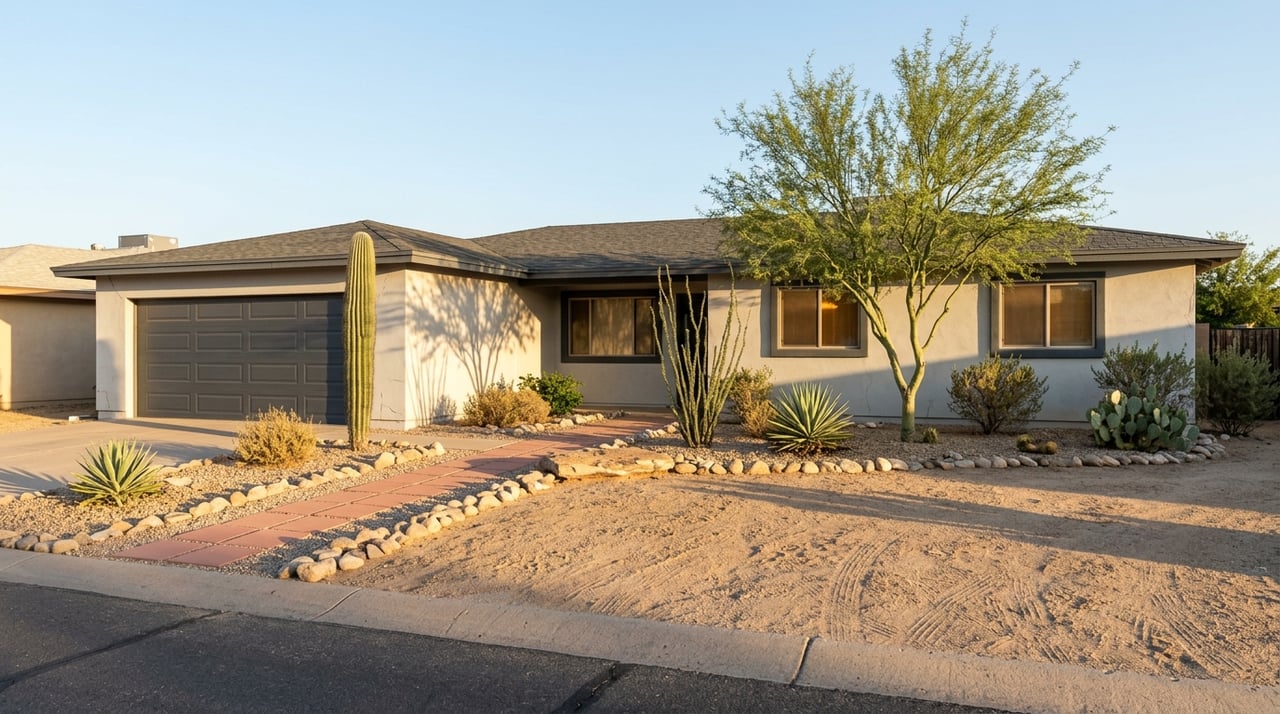
If you are wondering whether Vail feels like Tucson or something different day to day, the short answer is this: it feels more spacious, more suburban, and more routine-driven. For many buyers, that is exactly the appeal, especially if you want a quieter setting, more homeownership, and easy access to outdoor recreation. At the same time, everyday life here usually means more driving, higher housing costs than Tucson overall, and planning your schedule around commutes and errands. Let’s dive in.
Vail Feels More Suburban
Vail is best understood as a southeast Tucson suburb with a strong school-centered identity. According to Census QuickFacts, Vail had 13,604 residents in 2020 and about 600 people per square mile, which is much lower density than Tucson at 2,251.6 people per square mile.
That lower density shapes how life feels when you live here. You are less likely to feel surrounded by city activity and more likely to notice a quieter rhythm built around neighborhoods, schools, and driving between destinations. If you are moving from a denser part of Tucson or from a larger metro area, that difference stands out quickly.
Another major part of daily life is homeownership. Census data shows a 91.1% owner-occupied housing rate in Vail, compared with 51.8% in Tucson. In practical terms, that points to a place where many residents are putting down roots and settling into a long-term suburban routine.
A Family-Oriented Daily Rhythm
Vail also has a younger household profile than Tucson overall. Census data shows 23.7% of Vail residents are under 18, compared with 19.3% in Tucson. That does not define who lives there, but it does help explain why so much of everyday life often revolves around school schedules, activities, and family logistics.
The Vail School District describes the area as a community that values heritage, education, local business, and people. Its attendance area covers the southeastern corner of Tucson, Corona de Tucson, and the Vail area, which reinforces the idea that this is not just one compact town center, but a broader suburban community linked by shared routines.
For parents and caregivers, convenience matters as much as identity. Vail Community Programs offers preschool, before and after care, and school break camps at 10 locations, including care for preschool through 5th grade. That can make the weekly schedule easier to manage if you need structured options during the workday or school breaks.
Schools and Support Shape Daily Life
In Vail, schools are one of the biggest anchors of daily life. The Vail School District says it serves more than 15,000 PreK-12 students across 22 schools. Whether you are dropping kids off, heading to activities, or planning your week around school calendars, that system plays a big role in how the area functions.
Community support goes beyond the school day. Pima County Public Library says the W. Anne Gibson-Esmond Station Library is located in Vail and serves the greater Vail area, including Corona de Tucson, Vail, and Rita Ranch. The county bookmobile also makes monthly visits to Corona de Tucson and Vail.
That matters because suburban living can sometimes feel spread out. Library access, along with county recreation programs, adds more structure and resources to everyday life without requiring you to head into central Tucson for every activity.
Expect a Drive-First Routine
One of the clearest things about life in Vail is that most errands happen by car. The best-supported picture from local planning and census data is a drive-first routine with nearby service corridors, not a walkable downtown-style environment.
A Tucson planning document describes the Houghton and Old Vail Road area near Rita Road as a commercial core with retail, services, office and medical uses, a shopping center, a public library next to schools, and a post office near Rita Road and Houghton. That means your practical day-to-day needs are nearby, but they are arranged in a suburban pattern rather than a compact main street.
If you like the idea of having room to spread out and do not mind driving for groceries, appointments, and activities, this setup can feel very workable. If you want highly walkable errands and dense urban convenience, Vail may feel less immediate than central Tucson.
Park-and-Ride Adds Another Option
Even though driving is central to daily life, Vail is not cut off. Sun Tran lists Route 102X starting from the Old Vail and Rita Road Park & Ride and running to downtown, the UA Tech Park, and local offices.
That gives some commuters another option, especially if you work along that route. Still, the overall pattern remains suburban and car-dependent, with transit acting more like a targeted commuter tool than an all-purpose daily network.
Housing Tradeoffs Matter
For many buyers, Vail offers the lifestyle tradeoff they are looking for. You often get a quieter feel, more space, and a suburban setting, but the cost side deserves just as much attention.
Census QuickFacts shows the median monthly owner cost with a mortgage in Vail was $1,979, compared with $1,482 in Tucson. Median gross rent was also higher in Vail at $2,057, compared with $1,145 in Tucson.
That does not automatically make Vail the wrong fit. It simply means your budget should account for the fact that the suburban experience here often comes with a higher monthly housing cost than Tucson overall.
Commutes Are Part of the Equation
The time tradeoff is real too. Mean travel time to work in Vail was 29.7 minutes, compared with 21.9 minutes in Tucson.
That gap may not sound huge on paper, but it can shape your mornings, school drop-offs, after-work errands, and how often you head into other parts of the metro area. If you are considering Vail, it helps to picture not just the home itself, but how your weekly routine will flow.
Outdoor Access Is a Big Lifestyle Perk
If you enjoy desert scenery and time outside, Vail has strong day-to-day appeal. One of the biggest advantages of living here is how quickly you can reach open space, trailheads, and regional recreation.
Pima County says Colossal Cave Mountain Park in Vail is a 2,400-acre county park in the foothills of the Rincon Mountains. The park includes desert, grassland, dry cave, and riparian habitat, and the Arizona National Scenic Trail crosses through it.
McKenzie Ranch Trails Park adds another outdoor option on the far east side of Pima County. The county describes it as a 1,700-acre open-space park with hiking, mountain biking, trail running, a 3.2-mile Hohokam Trail, and a 10-mile competition course.
Weekend Options Feel Close
Vail also puts you within reach of other well-known outdoor spots. Cienega Creek Natural Preserve is accessed from the Gabe Zimmerman Davidson Canyon Trailhead in Vail, though Pima County notes that permits are required to access the preserve unless you are only using the Arizona National Scenic Trail.
Saguaro National Park’s Rincon Mountain District, often called Saguaro East, is also nearby on Tucson’s east side. The National Park Service notes that the east side includes trail options such as the Freeman Homestead Trail, which it describes as family-friendly and interpretive.
For paved recreation and everyday movement, the Chuck Huckelberry Loop adds another layer of connectivity across Pima County. Pima County says the Loop includes about 137 miles of paved pathways and bike lanes that connect parks, trailheads, bus and bike routes, workplaces, restaurants, schools, and shopping areas.
Desert Living Requires Planning
The outdoor lifestyle is a real advantage, but it comes with responsibilities. In summer, heat is not a minor detail. It is something you need to plan around.
The National Park Service recommends plenty of water and sun protection for hiking and notes that thunderstorms, flash floods, rattlesnakes, mountain lions, and black bears can all be part of the outdoor environment. That does not make outdoor living less enjoyable, but it does mean your routines should include preparation and awareness.
For many people, this becomes part of the rhythm of living in Southern Arizona. Early starts, weather checks, extra water in the car, and a healthy respect for trail conditions are simply part of the lifestyle.
What Daily Life in Vail Comes Down To
So what does everyday life in Vail really feel like? In simple terms, it feels like a suburban tradeoff that many buyers actively want. You get more space, a quieter setting, school-centered routines, and fast access to desert recreation, while giving up some of the density and convenience of central Tucson.
For the right buyer, that balance feels calm, practical, and worth it. If you are relocating, moving up into more space, or trying to find a community in the Tucson area that fits your routine, Vail is a place where it helps to look beyond the map and imagine how your actual days will unfold.
If you want help thinking through whether Vail fits your budget, commute, and lifestyle goals, Genardini Realty Solutions offers thoughtful, local guidance to help you move with clarity and confidence.
FAQs
What is everyday life like in Vail, AZ?
- Everyday life in Vail usually feels more suburban and spread out than central Tucson, with a quieter pace, more driving, and routines often centered around home, school schedules, errands, and outdoor access.
Is Vail, AZ more suburban than Tucson?
- Yes. Census data shows Vail has lower population density and a much higher owner-occupied housing rate than Tucson, which supports a more suburban, homeowner-heavy feel.
Are errands easy to run in Vail, AZ?
- Yes, but most errands are typically done by car. The area has a commercial core near Houghton, Old Vail, and Rita Road with retail, services, office and medical uses, a library, and a post office.
How long is the commute from Vail, AZ?
- Census QuickFacts shows the mean travel time to work in Vail was 29.7 minutes, compared with 21.9 minutes in Tucson, so commuting often takes a bit more planning.
What outdoor activities are near Vail, AZ?
- Nearby options include Colossal Cave Mountain Park, McKenzie Ranch Trails Park, Cienega Creek access from the Gabe Zimmerman Davidson Canyon Trailhead, Saguaro National Park East, and connections to the Chuck Huckelberry Loop.
Is Vail, AZ a good fit for relocating buyers?
- Vail can be a strong fit if you want more space, a quieter suburban setting, access to community resources, and proximity to outdoor recreation, and you are comfortable with higher housing costs and a more car-dependent routine.